Thank you for visiting our sister site! Texoma Giving Partners is the funds and endowment department of Texoma Health Foundation and is dedicated to the establishment, management and success of philanthropic partners in our community.
Thank you for visiting our sister site! Reba’s Ranch House is a hospitality house owned and operated by the Texoma Health Foundation created through the love and support of Reba McEntire and countless donors.
A Sense of Calm Among the Chaos: Inside Sory Elementary’s New Teacher Wellness Room
May 7, 2026
By Olivia Holley
For teachers and school staff, the school day rarely pauses.
From the first bell to the last, they move between lessons, student needs, and moments that ask more of them than what’s written in their job description, often without a pause in between. Many carry their students’ stories with them long after the day ends. The work is meaningful, and at times, it can be heavy.
At Sory Elementary in Sherman ISD, there is now a small room that helps carry some of that weight.
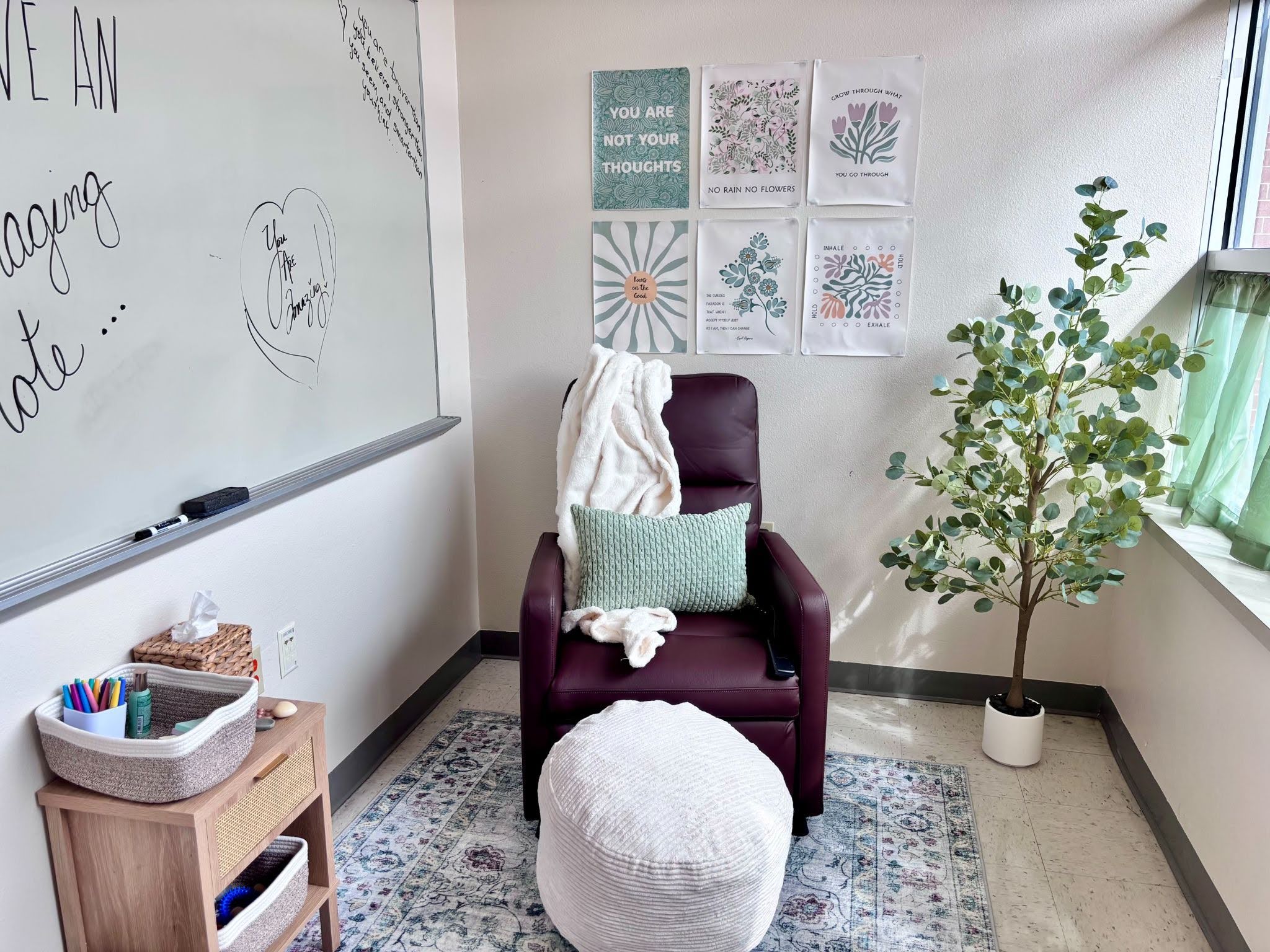
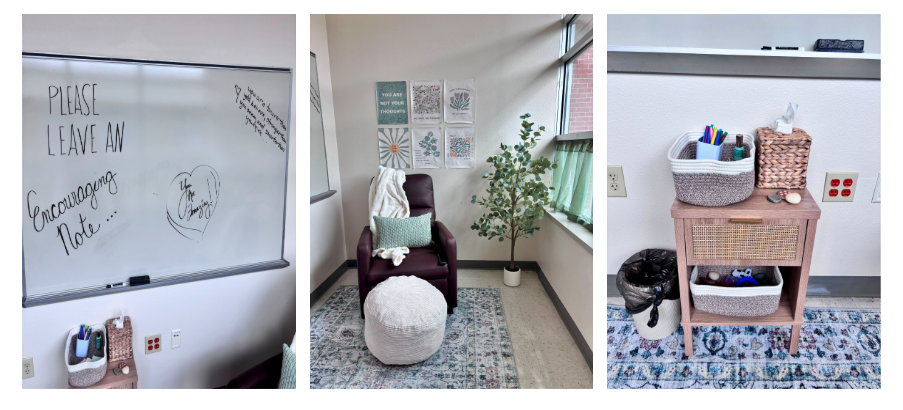
Through a partnership between Cook Children’s Center for Community Health and Texoma Community Foundation (TCF), Sory staff now have a dedicated wellness room. It is a quiet, intentional place where educators can decompress, reset, and simply breathe. One teacher described the space as “a sense of calmness among the chaos” and “a home away from home.”
The total investment was $1,000, shared between the two organizations, a small amount that now reaches an entire campus.
Why Spaces Like This Matter
Cook Children’s Center for Community Health focuses on prevention and community outreach, complementing the clinical care provided at Cook Children’s hospitals. Their work spans topics such as mental health, positive parenting, and injury prevention. Over time, they have also seen how much strain falls on the adults who serve children every day.
Many students arrive at school with adverse childhood experiences (ACEs) in their past. These experiences can show up in classrooms as anxiety, withdrawal, or disruptive behavior. Teachers, counselors, and support staff are often the first to respond, often standing between students and crisis in ways that go unseen.
Listening to hard stories day after day can create secondary trauma for adults. Without spaces to rest and process, it becomes harder to stay present and hopeful. Burnout and compassion fatigue are not abstract ideas in a school setting. They are real and often quiet.
A wellness room is one small, tangible way to support the people who show up for students every day. It is also a quiet reminder that caring for others requires taking care of yourself, too. It offers a space to:
Step away after a difficult conversation
Take a few deep breaths before returning to a classroom
Check on a loved one in privacy
Sit in quiet for a few minutes and reset
Supporting the people who support our kids is one of the most meaningful investments a community can make. When teachers feel grounded, they are better able to help students learn, heal, and discover their own sense of purpose.
How the Sory Wellness Room Took Shape
Sory Elementary’s counselor learned about Cook Children’s wellness room initiative and applied through the program’s application process. Schools are asked to show they have a designated space, support from campus leadership, and a shared understanding of why a room like this matters.
Sory met those criteria. Leadership believed in the importance of teacher wellness. A room was identified, and the campus was ready to turn it into something meaningful, a space that staff could call their own.
Cook Children’s had previously worked with Texoma Community Foundation to support a wellness room at Howe ISD. When a new opportunity arose within TCF's service area, Cook Children's reached out to explore another partnership for Sory Elementary. The collaboration came together easily, with both organizations contributing to the modest budget.
Sory handled practical steps such as rekeying the door so all staff could access the room, and worked with Cook Children’s to furnish and design it. What mattered most was not the specific decor but the feeling. The goal was to create a room that felt calm and welcoming, a place where staff could step away and reset when they needed it.
The room is now complete, open, and already in use. The school counselor described the space as a blessing and noted the early impact it is already having for staff.
Part of a Growing Network of Wellness Rooms
Sory’s wellness room is one part of a larger story. Over the last several years, Cook Children’s Center for Community Health has helped establish around ten wellness rooms across the region, with more in progress across Grayson County.
Most are located on school campuses. At least one was created for a police department, where staff also encounter high stress and trauma. In each setting, the purpose remains the same. People who spend their days caring for others need space to recover their own sense of calm and perspective.
Because funding is limited, not every school that applies can receive financial support right away. Even so, Cook Children’s provides a best practices toolkit to help campuses start planning their own rooms or strengthen future applications. The center also hosts counselor roundtables, bringing together professionals from public, charter, and private schools to share needs, ideas and feedback.
This network of rooms and relationships reflects a shared belief: healthy communities are built when the people who care for others are also cared for.
Hope, Purpose, and a Quiet Room
TCF’s vision is that every Texoman has a sense of hope and purpose. In many ways, teachers embody that vision every day. They step into classrooms with the purpose to teach, encourage, and help students imagine what is possible. They often help young people discover their own strengths and direction.
Even so, the people who pour so much into others still need space to restore their own sense of hope.
A small, quiet room on a school campus cannot remove every challenge. It can, however, give teachers space to rest long enough to remember why they started and what still matters.
The wellness room at Sory Elementary is one way we invest in our vision, through partnerships that respond to real needs in our community. A modest shared investment created a place where staff can slow down, breathe, and regain the energy they need to keep showing up for students.
When educators feel supported in their own well-being, they are better able to help children grow into adults who carry hope and purpose into the wider community. That ripple reaches far beyond the walls of a single room.